
When it comes to display hooks, material matters.
Plastic and metal display hooks can both be effective, but the right choice depends on what the hook needs to hold, where it will be used, and how the display needs to perform over time.
Choosing the right display hook starts with understanding the full application, including the product weight, packaging style, fixture type, store environment, and shopper interaction.
Kinter’s Rocky Lunardi offers insights into evaluating application factors and determining when plastic or metal display hooks are the right fit.
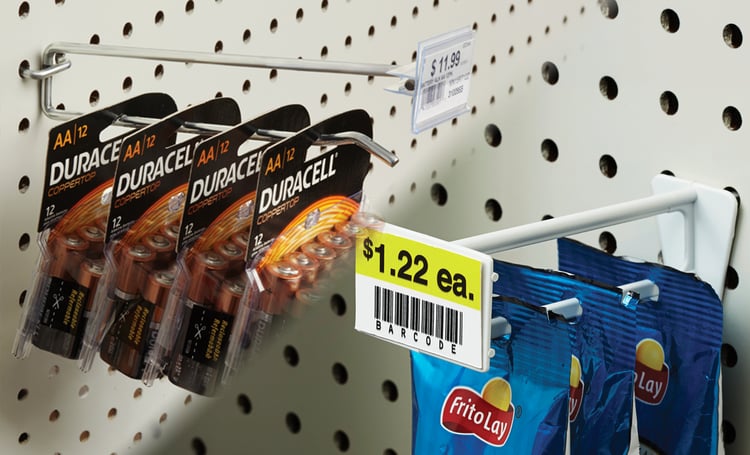
What's the Difference Between Plastic and Metal Display Hooks?
Plastic and metal display hooks can perform many of the same basic merchandising functions, but each material has characteristics better suited to certain applications.
- Plastic display hooks are commonly used for lighter products and shorter hook lengths.
- Corrugated displays often use plastic hooks with a backing designed to fit securely into the display material.
- Metal display hooks can support applications where more strength or length is required.
“Once a hook needs to extend more than 6 inches or the combined weight of several products starts to add up, metal display hooks are often the better choice,” says Kinter Salesperson Rocky Lunardi. “When product weight reaches a certain point, it can cause plastic hooks to sag.”
Material choice can also affect the overall cost of a display. Metal hooks generally have a higher material cost, so specifying metal for an application that can be handled by plastic can add unnecessary expense. At the same time, choosing plastic solely to reduce the hook cost can create problems if the merchandise causes the hook to bend.
The intended use of a display also helps put hook considerations into context. A short-term corrugated display may have very different requirements in comparison to a permanent store fixture expected to go through repeated resets. Hook material decisions should account for how the display will actually be used rather than treating one material as a default choice.
A closer look at plastic display hooks, their material, and design shows where they can be a logical choice.
What Are Plastic Display Hooks Best For?
Kinter offers plastic display hooks for several types of retail fixtures, including pegboard and slatwall applications. Kinter’s plastic pegboard/slatwall hooks are made from glass-filled nylon, which gives the hooks strength while allowing them to remain relatively lightweight.
“Sometimes, customers will underestimate what a shorter plastic hook is able to support,” says Lunardi. “A 2-inch or 3-inch plastic hook can be relatively strong, depending on the merchandise being displayed.”
As a plastic hook gets longer or the total anticipated product load increases, bending can become a consideration.
Plastic pegboard and slatwall hooks are available in configurations supporting different merchandising needs, including:
- Standard hooks for hanging merchandise.
- C-channel hooks for applications requiring data tickets, tags, or signs.
- Scan plate hooks for displaying pricing or product information.
- T-scan bar hooks for compatible label holders.
Mounting design is another consideration. Kinter offers plastic hooks with a double-rounded prong back designed for stability on standard pegboard and slatwall, while other plastic hook designs are made specifically for corrugated displays.
Are Corrugated Display Hooks the Same as Plastic Display Hooks?
Most corrugated display hooks are plastic, but the term describes the mounting application rather than the material itself. As Lunardi explains, the backing is designed around the construction of the corrugated display so the hook fits securely.
Corrugated displays can be designed with cutouts where the hook will be installed. Selecting the correct backing allows the hook to fit securely into the display rather than relying on a mounting style intended for pegboard or another fixture.
Kinter offers corrugated display hooks for different installation methods, including hooks designed for X-cut installation and configurations intended for pre-punched holes or slots. For a high-volume display build, the way the hook installs can affect the assembly process, making the mounting design an important specification before the display goes into production.
Material also matters because corrugated board behaves differently from a permanent fixture. Lunardi noted plastic is commonly used for corrugated displays; metal can place more stress on the cardboard.
What Are Metal Display Hooks Best For?
Metal display hooks are commonly used when the application requires greater strength, a longer hook, or a more durable solution for ongoing use.
Kinter’s metal display hook options include one-piece welded designs for retail fixture applications. Depending on the specific hook, metal configurations are available for standard pegboard and slatwall as well as other mounting systems.
Kinter’s metal options use welded construction designed to provide stability at the mounting point. Their durability can offset the higher cost of metal display hooks with practical reuse: permanent retail fixtures can reuse the hooks through repeated merchandising resets.
What Are Pegboard Hooks, and Do They Come in Plastic or Metal?
Pegboard is best thought of as the fixture type rather than a separate category in the plastic-versus-metal decision. Standard pegboard commonly uses 1/4-inch holes on a 1-inch-on-center pattern, so the first requirement is choosing a hook designed for the correct mounting configuration.
Pegboard also offers more flexibility than its name may suggest. Kinter’s pegboard hooks include different materials and configurations, and some designs can also mount to standard slatwall. For retail programs going into multiple locations, a dual-purpose pegboard/slatwall hook can help accommodate stores with different existing fixtures.
Pegboard also illustrates why it helps to separate how a hook mounts from what the hook needs to do. A pegboard application determines the required backing, while the merchandise and display requirements guide the remaining specifications.
When a standard plastic or metal pegboard hook does not address the mounting requirements, a hybrid configuration can combine components from both.
When Should a Display Use Combination Hooks?
Some applications call for a combination of plastic and metal components to address both mounting and merchandising requirements.
A single-prong hook can pair a metal merchandising stem with a plastic back, for example. Plastic slatwall back adapters offer another way to accommodate the fixture while retaining a metal stem to support the merchandise.
Hybrid configurations can be useful when an existing display needs to be retrofitted, or the mounting surface does not match the hardware originally considered for the project. The mounting component addresses how the hook connects to the fixture, while the rest of the hook can be selected based on the demands of the merchandise.
With several possible configurations available, answering a few application questions can narrow the options considerably.
How Do I Choose the Right Display Hooks for My Project?
The right display hook starts with understanding how the finished display will be built and used. Before choosing between plastic display hooks and metal display hooks, consider:
- How long will the display be used? A temporary corrugated program may have different hardware requirements from a fixture intended for ongoing resets.
- What mounting surface will hold the hook? Pegboard, slatwall, and corrugated displays require compatible mounting designs.
- What will be displayed? Product weight can influence whether plastic provides enough support or if metal is more appropriate.
- How long does the hook need to be? Longer hook lengths can increase the likelihood of plastic bending under load.
- Does the hook need to display pricing or product information? C-channel, scan plate, and other configurations can accommodate different labeling needs.
- How many hooks are required? Order volume can affect the cost and configuration of the hook order.
Product packaging should also be considered because package dimensions affect how many units will actually fit on a hook. Lunardi frequently asks customers to look beyond the size of the product itself and consider the full package that will hang on the display.
When the answer is still not obvious, a physical sample can help. Kinter customers can send product samples or photos for review, and KinterCare representatives can provide sample hooks to evaluate with the actual display. For unusual applications, Kinter’s engineering team can also help develop a custom prototype solution before a larger order is placed.
Where Can I Get Plastic, Metal, or Pegboard Display Hooks?
Kinter stocks display hooks across a range of standard configurations, including plastic, metal, corrugated, and hybrid options. For applications that require something beyond the catalog, Kinter’s engineering team can help develop a custom solution to meet specific display requirements.
Backed by in-house design and prototyping capabilities, the Kinter team works directly with customers to find the right fit as part of our Solved™ philosophy.
Contact Kinter to discuss your display application and find the right hook for your project, or browse our current catalog online.